

Masinde Muliro University of Science and Technology (MMUST), through the School of Computing and Informatics (SCI), has officially launched the practical phase of its annual Industrial Training Programme, reaffirming the University's commitment to producing highly skilled, innovative, and industry-ready graduates.
The programme is strategically designed to bridge the gap between theoretical classroom instruction and real-world industry practice by providing students with hands-on experience in a wide range of computing and information technology disciplines. Through intensive practical sessions, students are equipped with critical technical, problem-solving, and professional skills that enhance their readiness for industrial attachment and future employment opportunities. As the digital landscape continues to evolve at an unprecedented pace, the initiative seeks to expose learners to emerging technologies, industry best practices, and workplace expectations, thereby preparing them to thrive and contribute effectively in the increasingly competitive and technology-driven global economy.
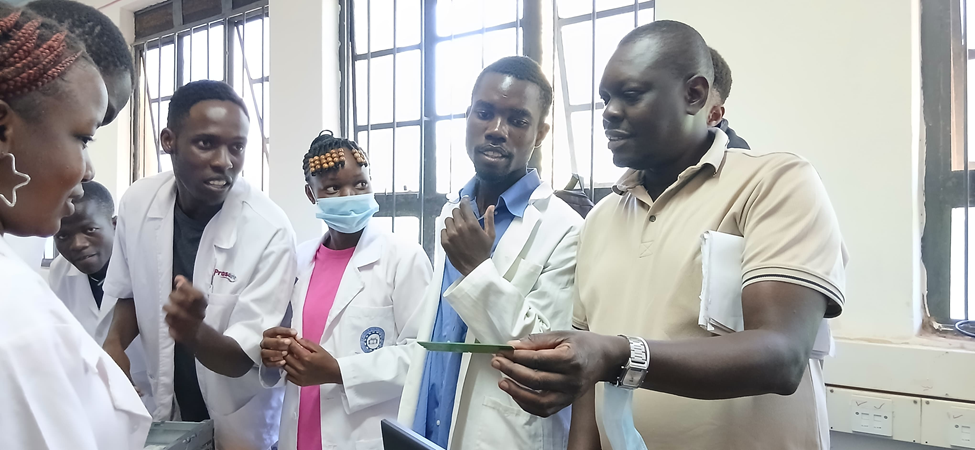
Mr. Victor Kadima taking students of the School of Computing and Informatics through a practical lesson during the practicum
The programme, organized by the School under the leadership of the Dean, Dr. Daniel Otanga, marks a transition from the theoretical training that students have been undertaking in areas such as Database Management and Full Stack Programming to practical sessions that emphasize the real-world application of computing concepts. The training has brought together over 300 Degree and Diploma students drawn from the Computer Science, Information Technology, and Knowledge Management and Information Systems programmes.
Coordinating the programme is Mr. Waliaro Apollo, working alongside Dr. Charles Mwango, the Course Lecturer for BCS 228 (Industrial Training – Computer Science), Mr. Laban Oenga, the Industrial Training Lecturer for Information Technology, and Ms. Sophy Nderaisho, Head of Technical Services, who serves as the team’s secretary. The students have been organized into 28 working groups comprising members from the different academic cohorts to enhance collaboration, peer learning, and teamwork.
Speaking during the event, Mr. Waliaro Apollo noted that the programme is designed to bridge the gap between theoretical learning and industry expectations by equipping students with advanced computing skills that enhance their employability.
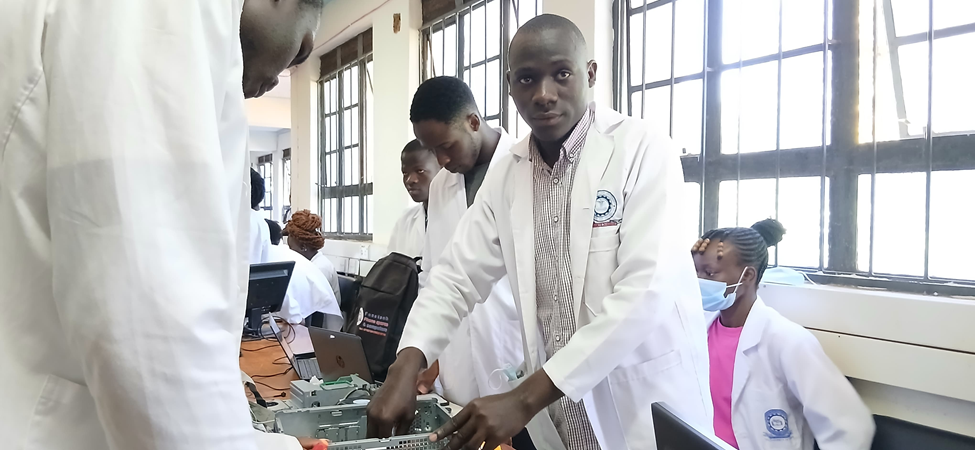
School of Computing and Informatics students during the practicum
“Our objective is to equip students with high-level computing skills that enable them to compete effectively in the job market. We have witnessed many of our students secure employment opportunities even before graduation because of the practical competencies they acquire through this programme,” he said.
Mr. Apollo further revealed that the School intends to strengthen the programme by introducing more components in Data Science and Library Science while exploring opportunities to extend similar training to students pursuing Mathematics and Statistics in the School of Natural Sciences.
According to one of the facilitators during the event, Mr. Kadima, “The entire programme is designed to provide practical skills that complement classroom learning. By the end of this workshop, we expect the students to have developed competencies comparable to those of Tier Two and even Tier Three IT specialists in selected areas.” The Industrial Training Programme comprises six modules, namely Full Stack Development, Hardware and Maintenance, Network and CCTV Systems, System Administration, Internet of Things (IoT) and Artificial Intelligence (AI), and an Industrial Exposure Trip.
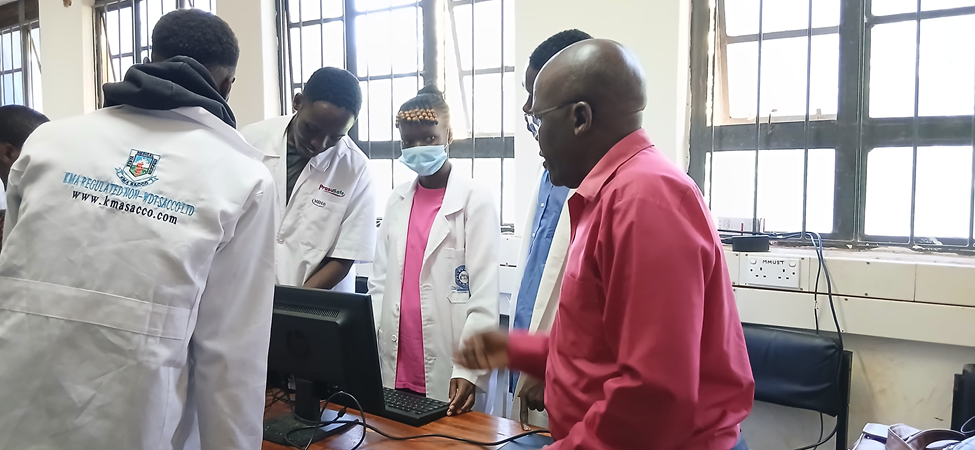
Mr. Apolo Waliaro taking students of the School of Computing and Informatics through a practical lesson during the practicum
Mr. Kadima also disclosed that the programme will culminate in an industrial exposure trip to Mombasa, scheduled to take place from 27th to 31st July. The four-day trip is expected to expose students to real industry environments, strengthen their understanding of workplace practices, and create opportunities for securing industrial attachment placements.
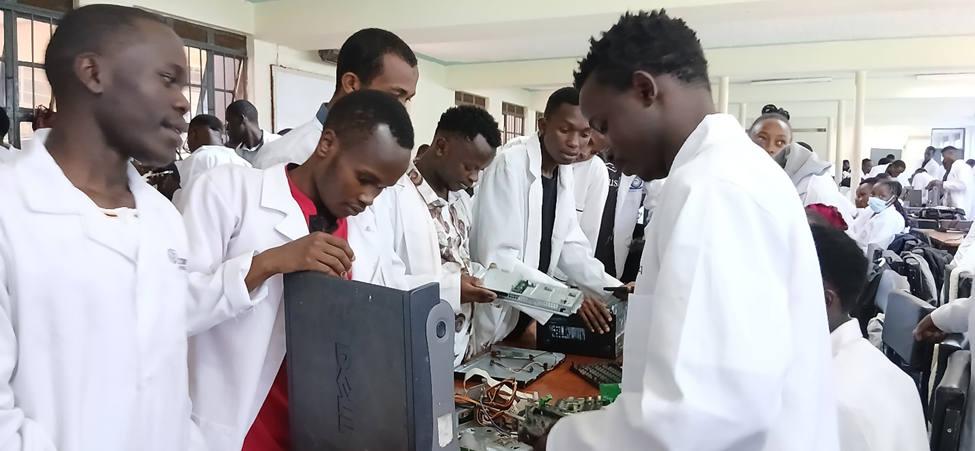
The first practical activity focused on computer assembly and disassembly, allowing students to gain hands-on experience in hardware installation, maintenance, and troubleshooting. The exercise challenged learners to apply classroom knowledge in solving real technical problems while working collaboratively within their groups.
Addressing the students, Dr. Charles Mwango emphasized the critical role that the programme plays in preparing learners for industrial attachment. He observed that feedback from both students and employers has consistently demonstrated the effectiveness of the initiative.
“Many of our students who have gone for attachment have reported finding it easier to adapt to workplace environments because of the practical exposure they receive through this programme. Employers have equally testified that MMUST students demonstrate exceptional practical competencies compared to many of their counterparts from other institutions,” he said.
Dr. Mwango encouraged students to pursue professional certifications in emerging areas such as IBM technologies, Internet of Things (IoT), and Cybersecurity, noting that such qualifications significantly enhance employability and performance in technical interviews.
“Professional certifications strengthen practical skills and increase one’s competitiveness in the job market. They give students an advantage when seeking employment opportunities and demonstrate a commitment to continuous professional growth,” he added.
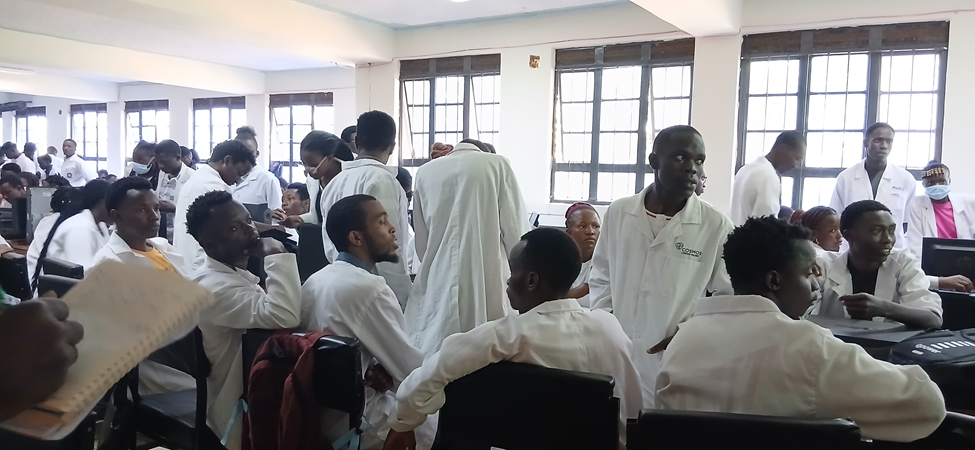
School of Computing and Informatics students during the practicum
The programme also highlighted MMUST’s continued investment in modern teaching and learning technologies. The University has embraced digital transformation through the integration of smart screens and other modern technological infrastructure that support practical training and interactive learning experiences.
Students expressed excitement about the opportunity to acquire industry-relevant skills through the programme. Speaking during the training, the School of Computing and Informatics Male Representative, Mr. Joseph Otieno, commended the University for providing students with a platform to enhance their technical competencies before proceeding for industrial attachment.
“I am excited and happy to be learning through such a programme. I look forward to acquiring the practical skills that are required in the job market and becoming a more competitive computing professional,” he said.
The annual Industrial Training Programme continues to distinguish MMUST as a leading institution in practical computing education by integrating theory with hands-on experience. As students continue with the training and prepare for industrial attachment, the initiative is expected to further strengthen the University’s efforts towards producing innovative, competent, and industry-ready graduates capable of thriving in the digital era.
By Lucy Akinyi and James Nyachoti